Welcome to Avada Order Limit
What you can do with Avada Order Limit
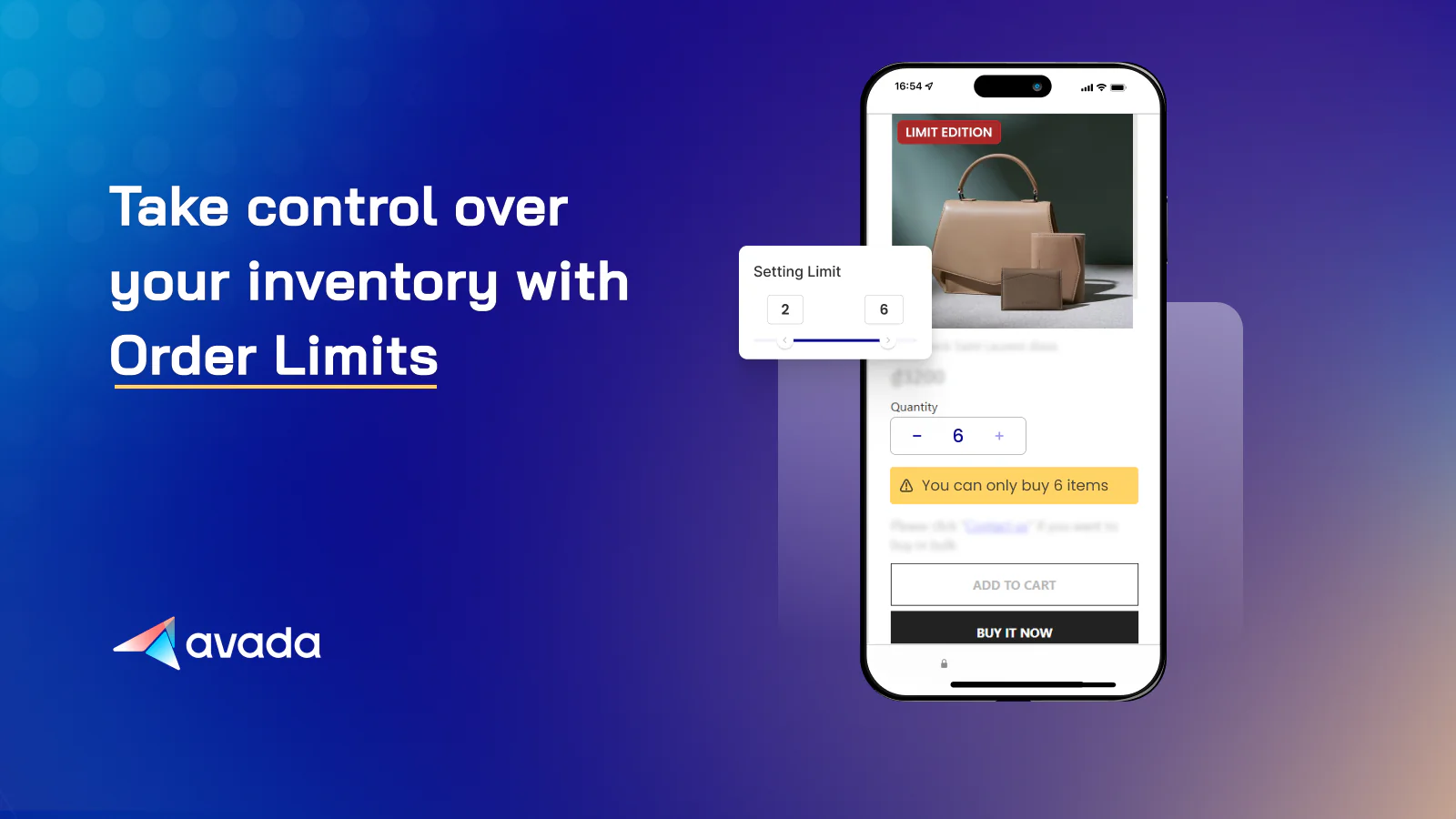
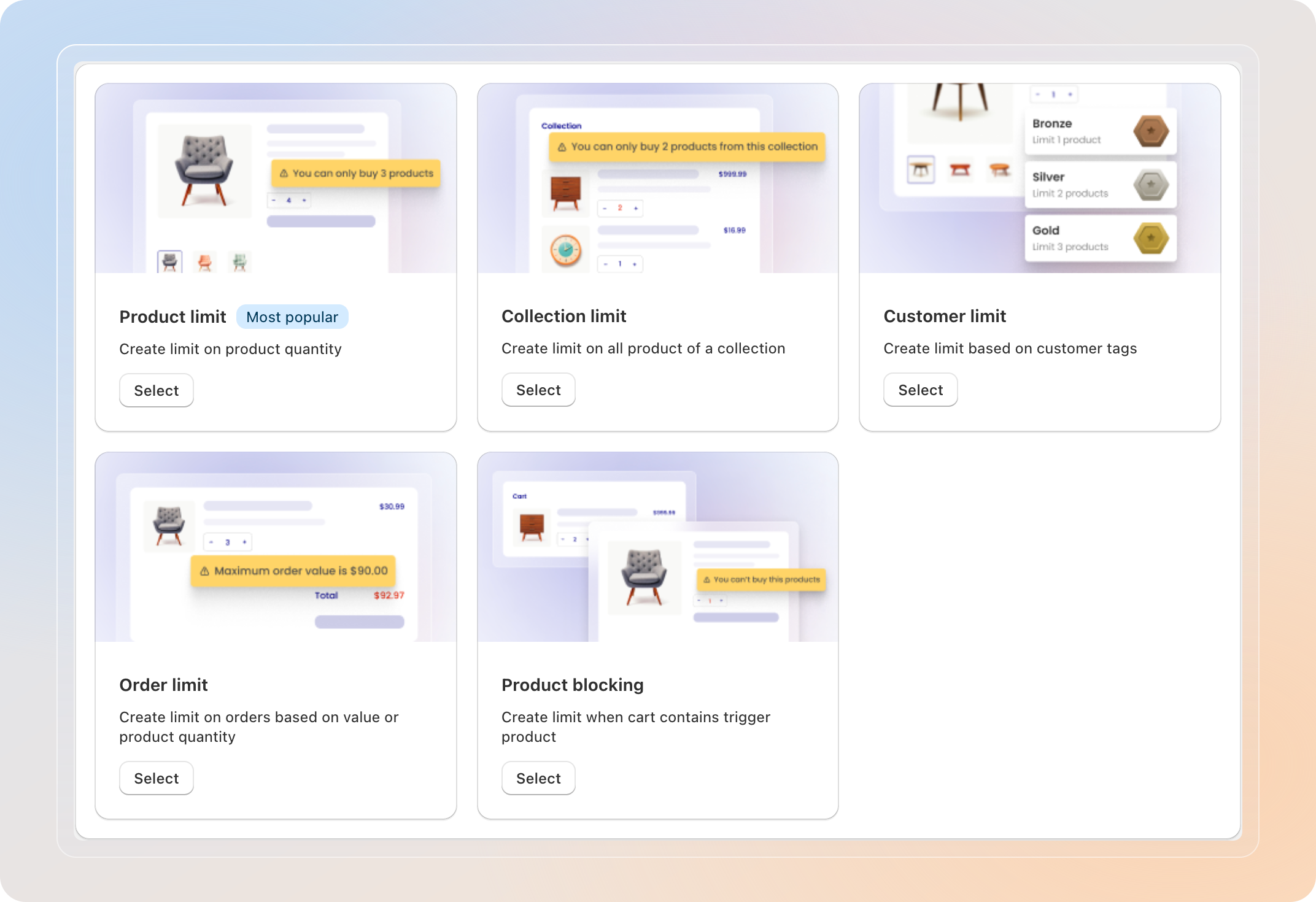
The app turns one big question — "how do I keep customers from buying too little, too much, or the wrong combination?" — into five focused limit types. Each type targets a different scope, and you can run as many of them in parallel as you need.
| Limit type | What it controls |
|---|---|
| Product limit | Minimum and maximum quantity, total value, or total weight for specific products (or every product in your store). Best for protecting hot SKUs and enforcing per-product caps. |
| Collection limit | Minimum and maximum quantity or total value, counted across every product inside a Shopify collection. Useful for category-wide rules — e.g., a shopper can add at most 3 items total from your "Limited Edition" collection to a single cart. |
| Customer limit | Limits scoped by customer tag. Apply different rules to wholesalers, VIPs, B2B accounts, or any segment you tag in Shopify. |
| Order limit | Whole-cart caps based on the total number of items, the cart value, or the cart weight. Great for shipping thresholds, minimum order values, and store-wide quantity ceilings. |
| Product blocking | Stops specific products from being purchased together — for example, blocking a discount item when a competing SKU is already in the cart. |
Why merchants reach for it
- Protect inventory during sales. Cap quantities so the first 50 customers don't take every unit.
- Enforce fairness. Give more shoppers a shot at hot drops by limiting how many a single customer can buy.
- Encourage bulk buys. Require minimums for wholesale offers, packs, or B2B catalogs.
- Stay compliant. Enforce purchase caps for products with legal restrictions (age-gated, regional, regulated).
- Lock in shipping economics. Use Order limits to require a minimum cart value or weight before checkout.
How a limit works, end to end
Every limit you create follows the same flow inside the app:
- Choose a limit type — Product, Collection, Customer, Order, or Product blocking.
- Name the limit — internal-only, so use a descriptive name for your future self.
- Pick what the limit applies to — specific products, a collection, a customer tag, or the whole cart.
- Set the condition — minimum/maximum quantity, value, or weight, plus optional multiples and per-variant behavior.
- Configure advanced settings — start/end dates, when to notify the customer, re-purchase rules, and an optional "Contact us" link.
- Customize the message — write the on-storefront text and use variables to keep it dynamic.
When the customer hits the limit in the storefront, the app shows the message you wrote and (depending on the rule) disables the Checkout button until the cart matches.
Pick your first limit
Most merchants start with one of these two:
- Cap a single hot product. Use Create a Product limit to set "max 2 per order" on a specific SKU.
- Set a minimum order value. Use Create an Order limit to require a $50 cart minimum.
From there, layer on Collection, Customer, and Product blocking rules as your store grows.
Furthermore
Once you've got a feel for the basics, dig into the advanced features:
- Multiples — force purchases in pairs, six-packs, or any custom bundle size.
- Skip quantity values — block specific quantities (e.g., 9 and 18) from being added to the cart.
- Re-purchase limit — limit how often a customer can buy the same product over time.
- Branding & translation — match the limit message to your store's look and translate it for international shoppers.
And there you have it! You now know what Avada Order Limit can do and how the pieces fit together. Pick a limit type that matches a real problem in your store and walk through the matching guide — most merchants have their first rule live in under 10 minutes.
If you have any questions or run into any issues, don't hesitate to reach out. We're here to help!
Next: App Overview